December 9, 2022
Austral Group Team
Innovation for Social Inclusion
Monica Villanueva has worked with people with disabilities, which enriched her perspective.
Read article



.webp)
For MBA students from the University of St. Thomas, understanding the coffee supply chain meant more than lectures, it meant stepping into the fields of rural Colombia, navigating the corridors of export hubs, and engaging with the people who turn beans into a global commodity.
This was hands-on learning at its best, a carefully constructed immersion where every encounter, from smallholder farmers to multinational exporters, peeled back another layer of complexity. While typical study trips might skim the surface, each stop in this journey served a distinct purpose, giving students a panoramic view of the challenges and breakthroughs shaping Colombia’s coffee industry.
In the high-altitude farms outside Bogotá, students witnessed the roots of coffee’s value chain. At La Palma & El Tucán, they explored how a sustainability-focused model empowers local farmers while producing world-class specialty coffee. Meanwhile, Café San Alberto challenged their palates with a “Coffee Baptism,” demonstrating how sensory quality translates into market differentiation.But the real insight? Scale vs. craft. While the Federación Nacional de Cafeteros (National Coffee Federation) showcased Colombia’s institutional strength in stabilizing prices and supporting farmers, smaller producers highlighted the trade-offs, how traceability and premium branding require entirely different systems than mass production.
The shift from farm to port was stark. In Cartagena, students stepped into the Sociedad Portuaria terminal, where millions of bags of coffee are prepared for export. Here, the conversation pivoted to hard economics: How do tariffs, shipping delays, and infrastructure bottlenecks impact Colombia’s competitiveness? How do exporters balance speed with quality control?The contrast was intentional, where Bogotá emphasized production, Cartagena revealed the realities of global trade. Students left with a rare understanding of how policy, logistics, and market demand collide long before coffee reaches a consumer’s cup.
While other programs grazed the surface, this one tackled the complexities and contradictions head-on.
Ethics vs. Economics:
Can small farmers thrive in a commodity-driven market?
Tradition vs. Innovation:
How are tech and sustainability reshaping age-old practices?
Local vs. Global:
What does it take for Colombia to maintain its premium reputation?
By moving between cities, and between farmers, cooperatives, and logistics experts, students didn’t just hear about the supply chain; they experienced its contradictions and opportunities firsthand.
This experience moved beyond theory to reveal how global systems truly operate, from soil to shipment. At Austral Group, we specialize in turning these insights into transformative learning, partnering with institutions to create educational experiences that shape future business leaders through real-world immersion.

As Professor Kyle Goldschmidt observed:
“What began as a course on the coffee supply chain became a journey of global insight, proof that behind every cup lies a story of people, logistics, and relentless dedication to quality.”


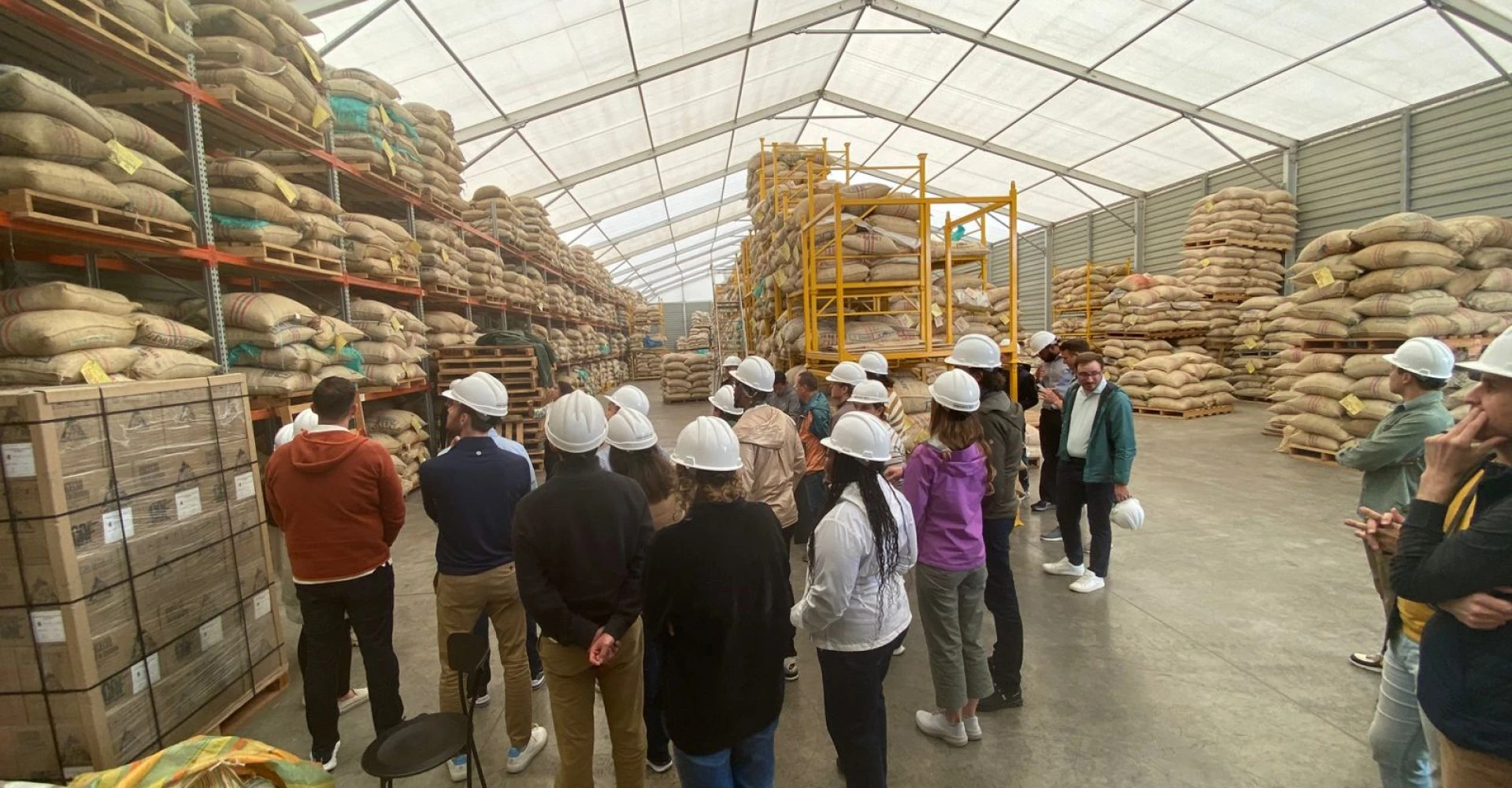

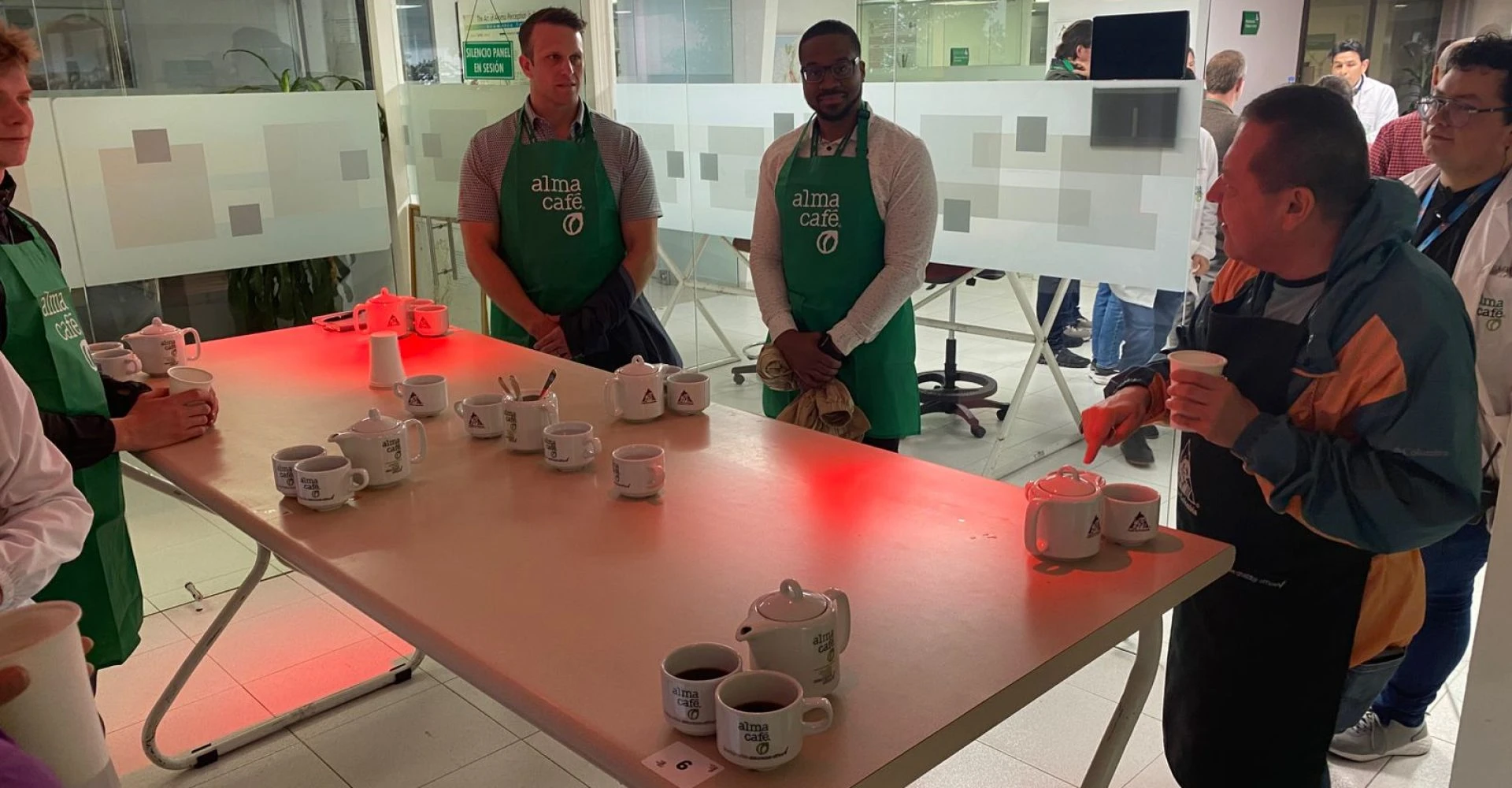
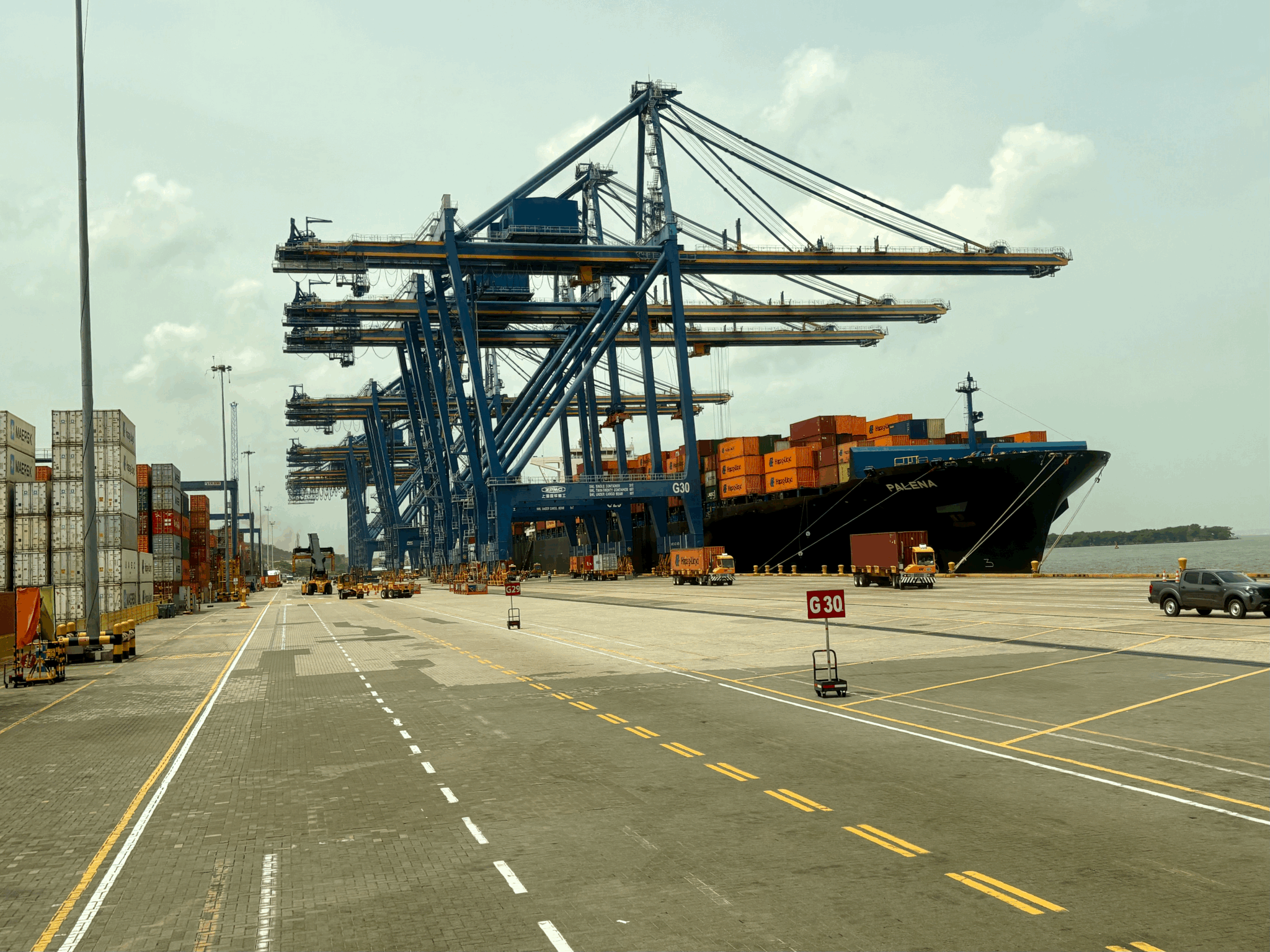
The shift from farm to port was stark. In Cartagena, students stepped into the Sociedad Portuaria terminal, where millions of bags of coffee are prepared for export. Here, the conversation pivoted to hard economics: How do tariffs, shipping delays, and infrastructure bottlenecks impact Colombia’s competitiveness? How do exporters balance speed with quality control?The contrast was intentional, where Bogotá emphasized production, Cartagena revealed the realities of global trade. Students left with a rare understanding of how policy, logistics, and market demand collide long before coffee reaches a consumer’s cup.
Colombia stands out as an extraordinary destination for business education, offering unrivaled opportunities for in-depth study of industries like agribusiness and disciplines such as supply chain management. Its rich diversity of landscapes and economic sectors provides students with hands-on experiences that go far beyond traditional classroom learning. From engaging with local farmers in the Coffee Belt to unraveling the complexities of global logistics in Cartagena, Colombia allows students to immerse themselves in both cultural and professional contexts.To start planning your next educational adventure in Colombia to inspire your students, get in touch with our team!
.webp)
.webp)



.svg)