July 7, 2023
Sustainability
Making Academic Travel Programs Inclusive for Students with Disabilities
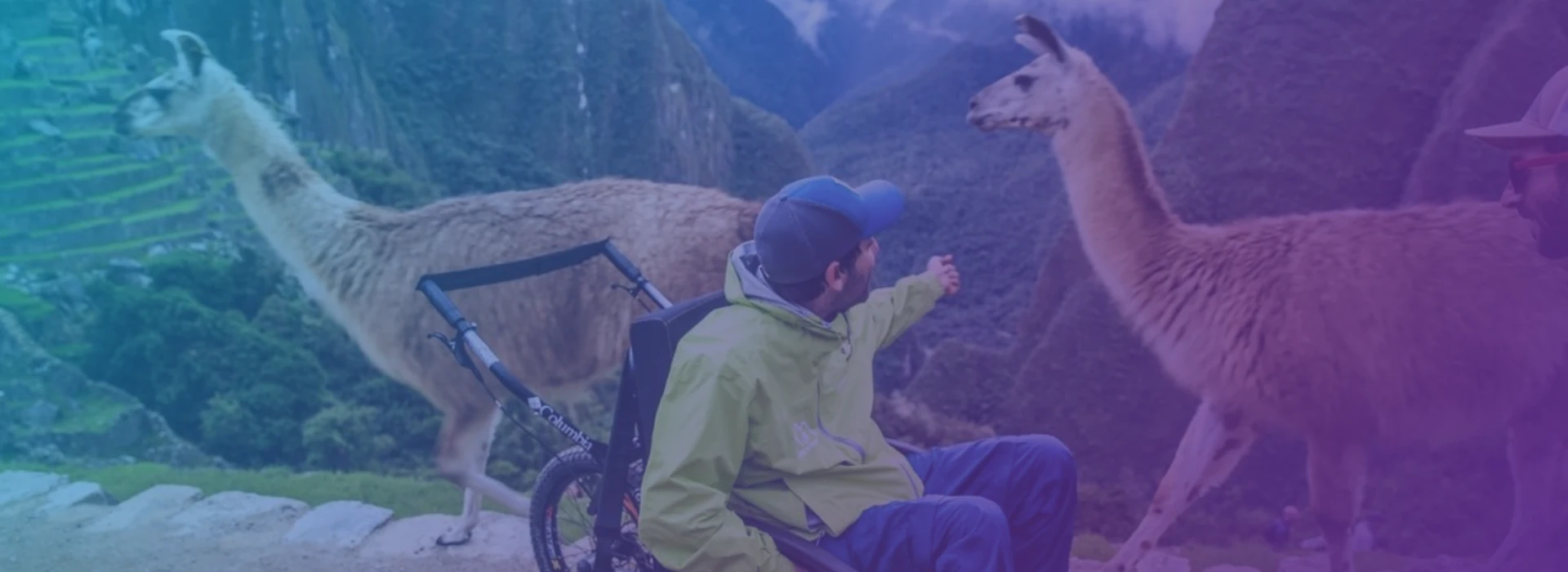
Academic travel programs offer cultural and professional growth, but many remain inaccessible to students with disabilities.
Read article




A conversation led by our ESG Lead, Sarah Taylor
As part of our mission to connect global academic talent with local business leaders tackling real-world sustainability challenges, our Global Learning and Engagement (GLE) team regularly sources projects in this space. I especially love celebrating the companies they find that are doing incredible work – and the successful collaborations that result – because these partnerships are a core part of how we create positive impact through our global programs.
I recently spoke with Lucas Giménez, Head of CEO Office at the Spanish start-up Alkeymia, about their collaboration with MBA students from the University of Liverpool. The project focused on evaluating the commercial viability of Sustainable Aviation Fuel (SAF), a critical next step in Alkeymia’s green molecule strategy.

Sarah:
Could you tell us a bit about Alkeymia and its mission?
Lucas:
Alkeymia was founded in 2023 as a spin-off from a company with over 20 years of experience in renewable energy, particularly in solar and wind. Our mission is to decarbonize industrial sectors that can’t be easily electrified, like aviation, shipping, fertilizers, and heavy chemicals. We do this by producing green hydrogen and converting it into sustainable derivatives like green ammonia and, potentially, SAF. This is where the student project comes in – we asked them to assess whether it made strategic sense for us to enter the SAF space.
Sarah:
What is your background, and how did you get involved in this project?
Lucas:
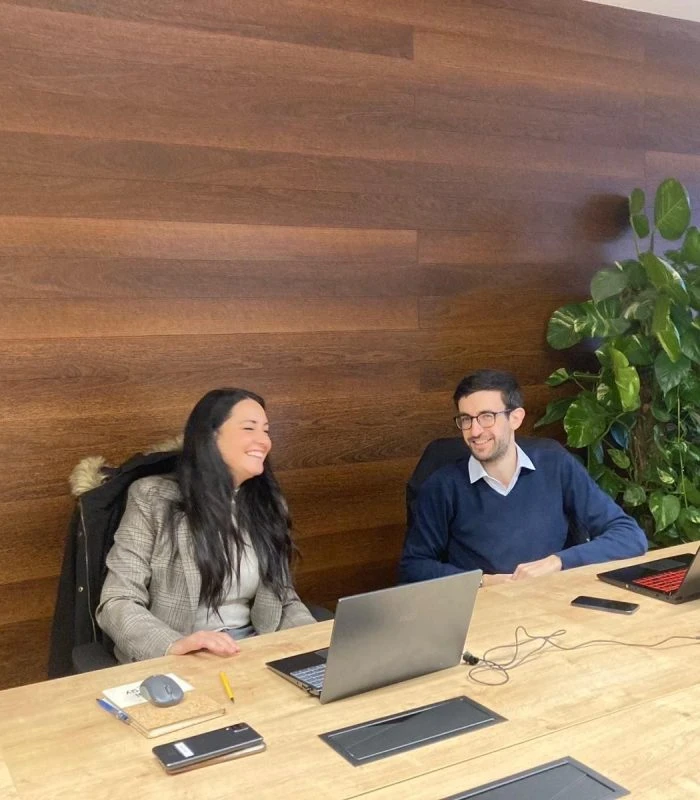
I studied industrial engineering in Madrid and worked in strategy consulting before joining the energy sector. At Alkeymia, I help coordinate new initiatives like SAF. For this project, I worked closely with a colleague, Susana, who’s our in-house expert on sustainable molecules. We both supported the students during their time in Madrid.
Sarah:
What challenge were you hoping the students could help solve?
Lucas:
Our big question was: Should we move into SAF? It’s a huge investment (potentially billions in capital expenditure) so we need solid insight before launching anything. We were looking for a high-level market analysis: is SAF profitable, is there demand, who are the competitors, and would a Spanish player be competitive?
Sarah:
How did the students approach the problem?
Lucas:
What impressed us was that, even though they came from different backgrounds and didn’t have industry-specific experience, both project groups followed a similar strategic approach. They analyzed the market, regulation, competitors, and then looked inward, evaluating Alkeymia’s capabilities. They even asked for sensitive data, which showed they were asking the right questions. We couldn’t share everything, but their thinking and approach reflected the strong academic preparation they are getting in their MBA program.
Sarah:
Were there any insights that surprised you?
Lucas:
While we had a good grasp of the big picture, the students provided updated data on SAF demand, airline commitments, and evolving EU regulations – like the requirement that 53% of aviation fuel must be biogenic by 2050. These were useful details we hadn’t fully incorporated into our latest internal reports.
Sarah:
How valuable was the students’ work in terms of time and resources saved?
Lucas:
I’d estimate the market research they provided would’ve taken our expert, Susana, about a full week of dedicated time – and that’s someone with prior knowledge. So yes, it saved us time and money. Their work helped validate our thinking and accelerated our internal decision-making.
Sarah:
Will their research impact your strategic direction?
Lucas:
Definitely. We’re in the early stages of developing a SAF project now. If the students had uncovered a major red flag, we might have paused, but instead, their findings confirmed our direction. So their work gave us confidence to move forward.
Sarah:
Any continuing collaboration with the students?
Lucas:
Yes! One of the students, from the University of Liverpool, reached out to see if he could continue working with us for his master’s thesis or as a summer project. We’re exploring that now. It’s great to see that level of engagement – we must have done something right if students want to stay involved.
Sarah:
How did the collaboration with Austral Group come about, and what was the process like?
Lucas:
Austral initially reached out through our HR department, which was a great channel. We had an introductory call in December with Austral and the University of Liverpool, then one with the students, and finally two mornings of in-person work in Madrid. Everything was smooth, well-organized, and fit well into our schedule.
Sarah:
What value did the collaboration bring beyond the final deliverables?
Lucas:
As a new company, just having 40 students and several professors learn about Alkeymia was valuable for our visibility and network. It was also enriching to speak with the Austral coordinators and the Liverpool professors during the sessions to exchange ideas beyond SAF.
Sarah:
Would you recommend this type of engagement to other companies?
Lucas:
Absolutely. It’s especially valuable for small, agile companies like ours. But I believe even large firms could benefit. There’s really no downside because you gain insights, visibility, and potential talent. We’d be happy to do it again.
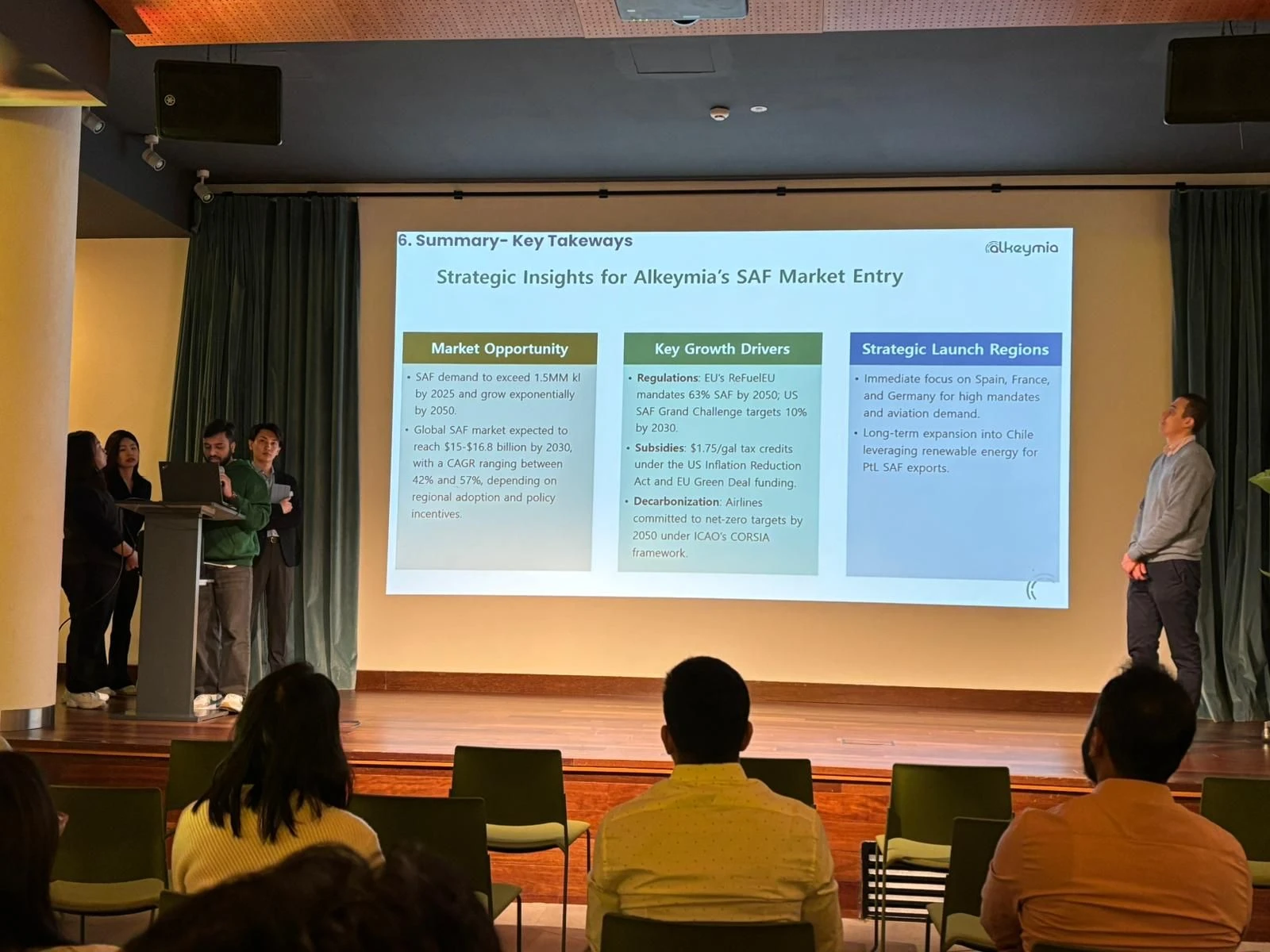
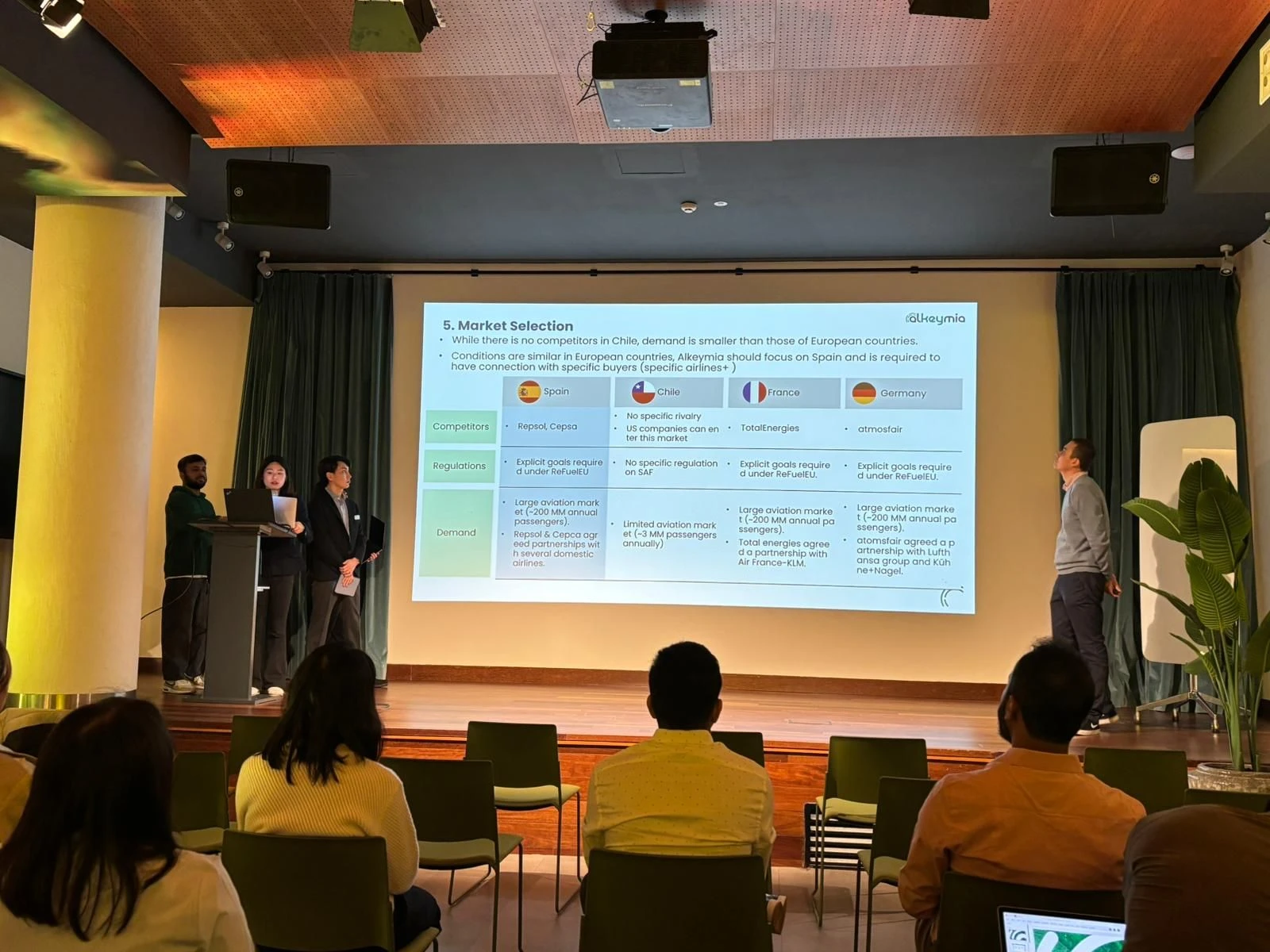
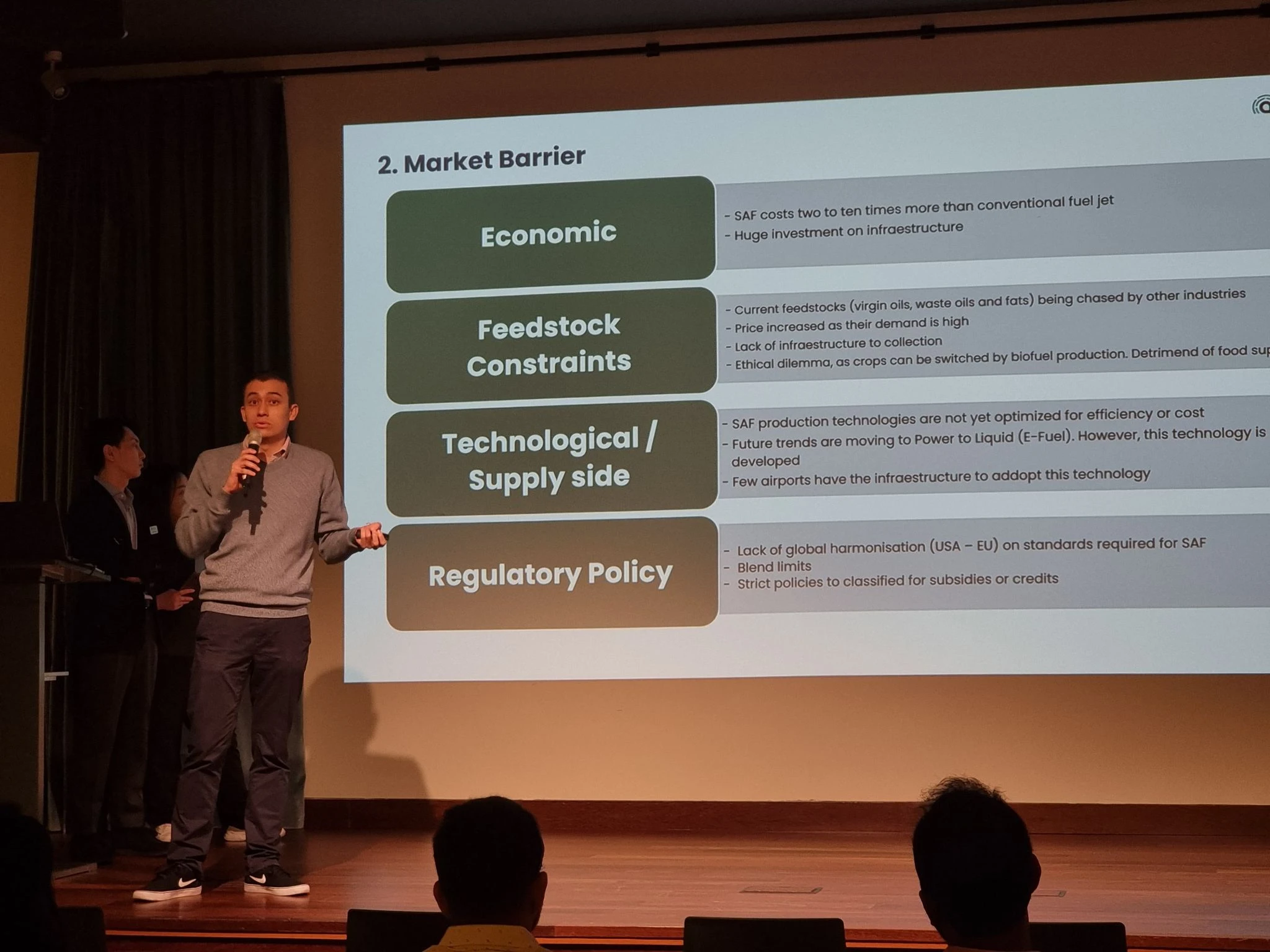
At Austral Group, we’re proud to help organizations like Alkeymia connect with the next generation of business leaders. These collaborations are not only mutually beneficial but also essential to advancing sustainable solutions in real markets.
Sarah:
I am particularly excited about this project because the work Alkeymia is doing is directly related to decarbonizing an industry extremely important to our business. The aviation industry will continue having a significant negative environmental footprint until SAFs are widely available in the commercial market, so seeing us supporting organizations that are working directly on developing these decarbonization solutions is exactly the type of purpose and impact we want to have on the Earth. Kudos to Maria Henning for finding this project with Alkeymia. Our colleagues on the Global Learning & Engagement (GLE) team are the powerhouse behind finding amazing projects like this one to match with student teams!


.svg)